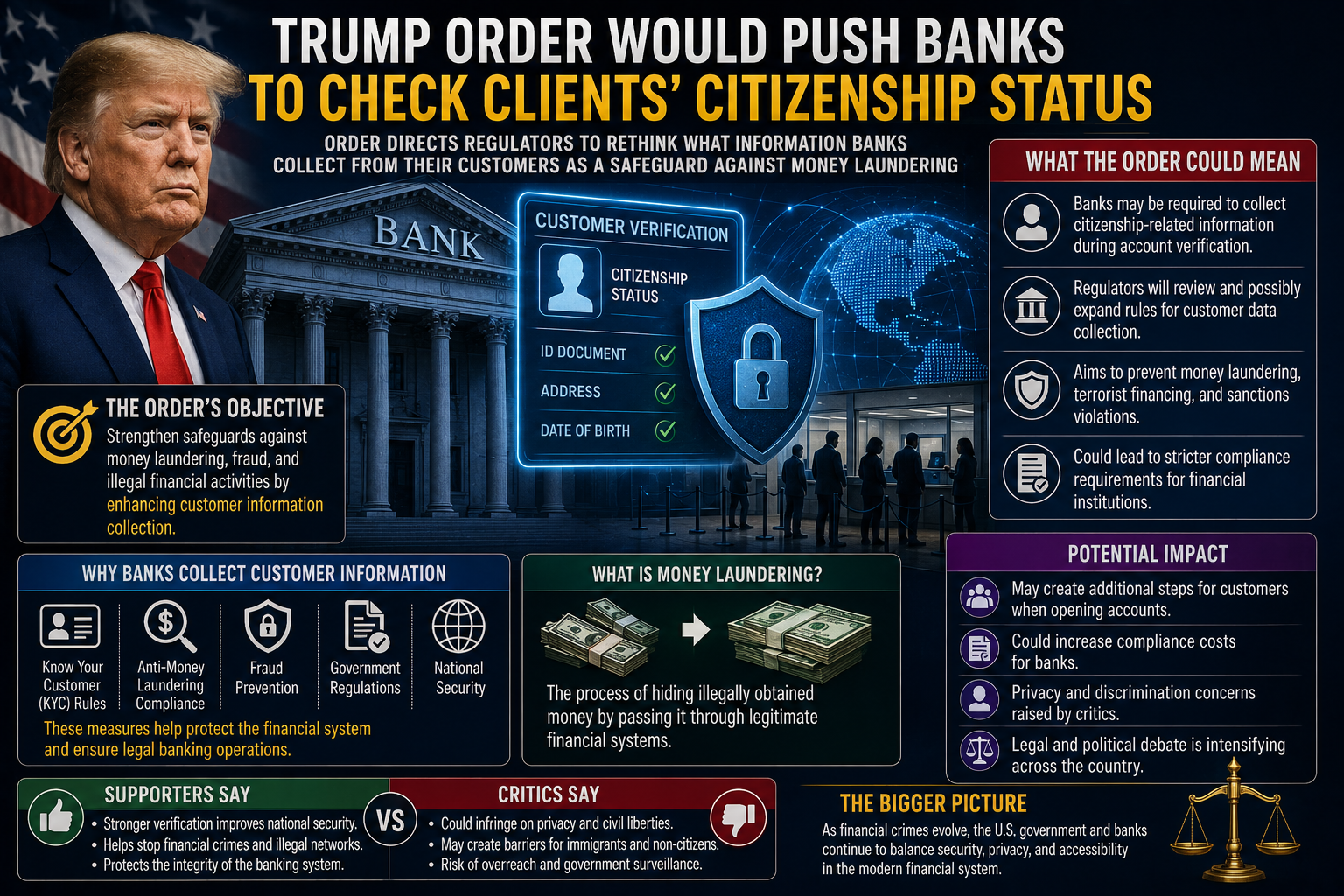
A major financial and political debate is growing in the United States after reports emerged that an order linked to Donald Trump could push banking regulators to reconsider how financial institutions collect customer information — including potential citizenship-related data.
The proposal has quickly triggered nationwide discussions involving:
- banking privacy
- anti-money laundering laws
- immigration concerns
- financial regulation
- government oversight
What Is the Proposed Banking Order About?
According to reports, the proposal would direct federal regulators to review and potentially expand the type of customer information banks collect during account verification processes.
The stated goal is connected to strengthening safeguards against:
- money laundering
- financial fraud
- illegal financial networks
- sanctions evasion
The discussions reportedly involve whether citizenship-related information should play a larger role in banking compliance systems.
Why Banks Already Collect Customer Information
Banks in the United States already collect identity information under laws connected to:
- anti-money laundering regulations
- Know Your Customer (KYC) rules
- financial crime prevention systems
When opening accounts, banks commonly request:
- government-issued identification
- address verification
- Social Security details
- tax-related documentation
These systems are designed to prevent criminal misuse of the financial system.
What Is Money Laundering and Why Does It Matter?
Money laundering refers to the process of hiding illegally obtained money by moving it through legitimate financial systems.
Governments worldwide attempt to prevent:
- drug trafficking finance
- terrorism funding
- cybercrime profits
- sanctions violations
- organized crime transactions
Because banks are central to financial flows, regulators often require strict identity verification processes.
Why the Proposal Is Controversial
Critics argue that expanding citizenship-related checks could create concerns involving:
- financial privacy
- discrimination risks
- access to banking services
- treatment of immigrants and non-citizens
Civil liberties advocates warn that aggressive identity requirements may discourage vulnerable communities from using formal banking systems.
Supporters, however, argue stronger verification helps improve national security and financial transparency.
How Banking Regulations Have Become Stricter Over Time
Following major global security and financial events, banking compliance systems have expanded significantly.
Modern financial institutions now spend billions annually on:
- compliance technology
- fraud detection
- identity verification
- transaction monitoring
Banks increasingly use advanced software and artificial intelligence to identify suspicious financial activity.
The Role of Financial Regulators
Several agencies in the United States oversee banking compliance and anti-money laundering systems.
These include regulators connected to:
- federal banking supervision
- financial crimes enforcement
- consumer protection
- national security monitoring
Any major policy changes could significantly impact how banks operate nationwide.
Could Citizenship Checks Affect Ordinary Customers?
Experts say most customers already provide identification documents when opening accounts.
However, critics worry expanded citizenship verification requirements could potentially create:
- additional paperwork
- account approval delays
- confusion for immigrants and international residents
- increased compliance costs for banks
The exact impact would depend on how regulators implement any new requirements.
The Link Between Banking and National Security
Modern governments increasingly view financial systems as part of national security infrastructure.
Tracking suspicious financial activity helps authorities combat:
- terrorism financing
- cybercrime networks
- international sanctions evasion
- organized criminal groups
This is why anti-money laundering regulations continue expanding globally.
Privacy Concerns Are Growing
Digital banking and advanced financial monitoring systems have also intensified debates surrounding privacy.
Many citizens worry about:
- government surveillance
- financial data collection
- personal information security
- digital tracking systems
As banks collect more customer data, public concern about data protection continues increasing.
How Global Banking Rules Influence the US
Financial compliance standards are also shaped by international organizations and agreements involving:
- anti-money laundering cooperation
- cross-border banking rules
- global sanctions systems
Banks operating internationally often follow strict global compliance frameworks.
Political Reactions Are Intensifying
The proposal has already generated strong reactions across political and media circles.
Supporters say:
- stronger verification protects financial systems
- national security risks require tighter controls
- fraud prevention should remain a priority
Critics say:
- excessive monitoring may hurt civil liberties
- banking access could become politicized
- privacy protections may weaken
The debate reflects larger national divisions surrounding immigration, security, and government authority.
Technology Is Changing Banking Compliance
Modern banks increasingly rely on:
- AI fraud detection
- biometric verification
- automated compliance systems
- digital identity analysis
Future regulations may further expand the role of technology in monitoring financial activity.
Could the Banking Industry Change Further?
Experts believe financial compliance systems will likely become even stricter globally due to:
- digital fraud growth
- cybercrime expansion
- geopolitical sanctions
- cryptocurrency monitoring
- international financial crime risks
Banks may increasingly face pressure to balance:
- security
- customer privacy
- accessibility
- regulatory compliance
Conclusion
The proposed banking order connected to Donald Trump has sparked a major debate about the future of banking regulation, citizenship verification, and financial privacy in the United States.
While supporters see stricter compliance as necessary for combating money laundering and protecting national security, critics warn that expanded data collection could raise serious privacy and civil liberties concerns.
As governments and banks continue adapting to evolving financial risks, one thing is becoming increasingly clear:
The future of banking will involve much deeper intersections between technology, security, regulation, and personal identity
FAQs
Why would banks check citizenship status?
The proposal is reportedly connected to anti-money laundering and financial compliance efforts.
Do banks already collect customer information?
Yes. Banks already require identity verification under existing financial regulations.
What is money laundering?
Money laundering is the process of disguising illegally obtained money through financial systems.
Why is the proposal controversial?
Critics argue it may create privacy concerns and affect access to banking services.