Why Is India Importing Industrial Ethanol?
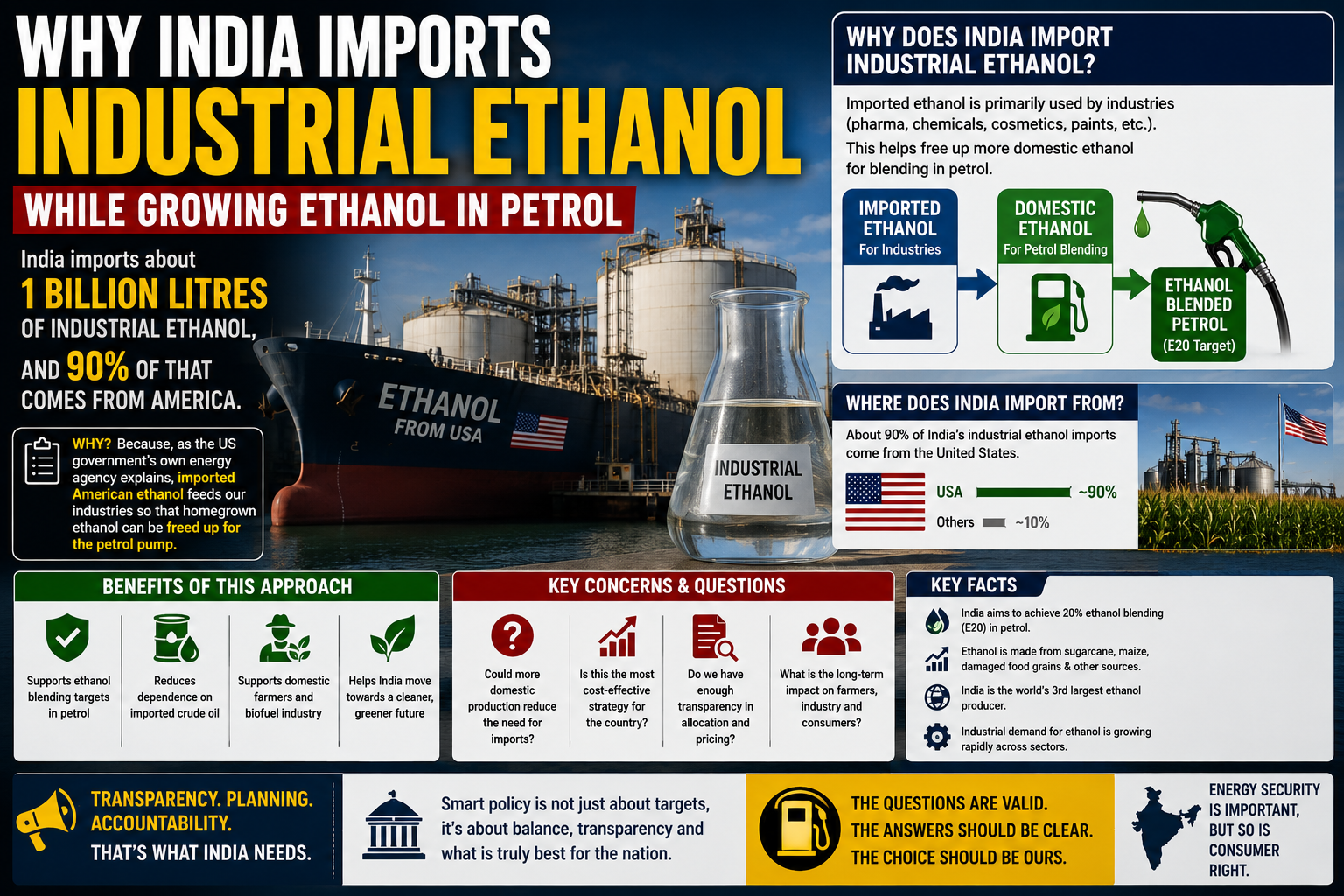
India has significantly expanded its ethanol blending programme to reduce dependence on imported crude oil and increase the use of domestically produced renewable fuels.
At the same time, India also imports substantial quantities of industrial ethanol. This has led many people to ask an obvious question:
If India produces ethanol domestically, why does it still need imports?
The answer lies in how different types of ethanol are allocated across sectors of the economy.
What Is Industrial Ethanol?
Industrial ethanol is used in a wide range of sectors, including:
- Pharmaceuticals
- Chemicals
- Paints and coatings
- Cosmetics
- Manufacturing
- Industrial processing
It is distinct from fuel ethanol, although ethanol can sometimes be redirected between uses depending on policy and supply.
Why Does India Import Industrial Ethanol?
One reason cited by industry and energy analysts is that importing industrial ethanol can help satisfy manufacturing demand while allowing a larger share of domestically produced ethanol to be used for India’s petrol blending programme.
In other words, imported ethanol helps support industrial requirements, enabling more domestic production to be directed toward achieving national blending targets.
This approach has been discussed in the context of India’s broader energy transition strategy.
Where Does the Imported Ethanol Come From?
Trade data indicates that India sources industrial ethanol from multiple countries, including the United States.
The mix of suppliers can change over time depending on production, pricing, and commercial contracts.
The Policy Debate
The strategy has generated differing views.
Supporters argue that:
- It supports India’s ethanol blending targets.
- It helps reduce crude oil imports.
- It provides flexibility during periods of changing domestic demand.
Critics question whether:
- Greater domestic production could reduce the need for imports.
- The policy is economically efficient over the long term.
- More transparency about ethanol sourcing and allocation would improve public understanding.
These questions are part of an ongoing public policy discussion.
Why Transparency Matters
Large-scale energy policies affect consumers, farmers, manufacturers, and fuel suppliers.
Providing clear information about:
- Domestic production,
- Imports,
- Fuel blending,
- Industrial demand, and
- Long-term strategy
can help citizens better understand how the policy operates and why particular decisions are made.
Frequently Asked Questions
Why does India import industrial ethanol?
Industrial ethanol imports can help meet manufacturing demand while allowing more domestically produced ethanol to be used for petrol blending.
Is imported ethanol used directly in petrol?
The allocation of ethanol depends on commercial and regulatory arrangements. Industrial ethanol is primarily intended for industrial applications.
Why is ethanol blending promoted?
India’s ethanol blending programme aims to reduce dependence on imported crude oil, support domestic biofuel production, and diversify energy sources.
Conclusion
India’s ethanol policy illustrates the complexity of balancing energy security, industrial demand, and agricultural production. The continued import of industrial ethanol alongside expanded petrol blending reflects strategic choices that remain the subject of economic and public policy debate.
As the programme evolves, transparent communication and publicly available data will remain important for helping citizens understand how these decisions affect industry, consumers, and the country’s long-term energy goals.