A growing number of people across India are questioning whether mainstream media is focusing more on political narratives and sensational debates instead of urgent humanitarian issues affecting ordinary citizens.
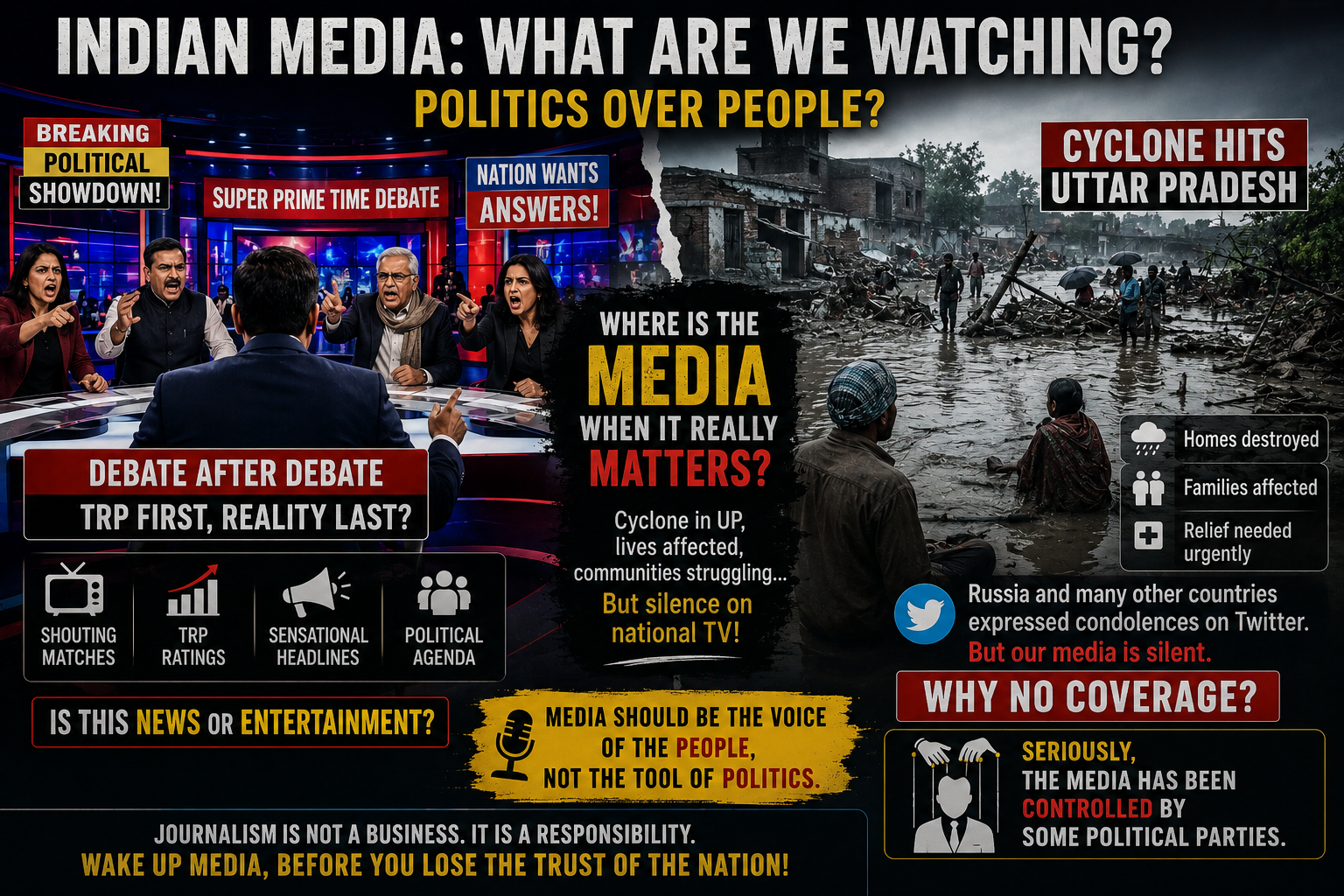
The recent criticism intensified after severe weather conditions and cyclone-related destruction reportedly affected parts of Uttar Pradesh, while many viewers claimed national television discussions appeared focused on political conflicts, celebrity debates, and studio shouting matches rather than ground-level reporting.
Public Anger Over Disaster Coverage
Many social media users expressed concern that major news channels were not giving enough attention to weather-related destruction and humanitarian challenges.
Several people online argued that:
- disaster victims deserve more national attention
- regional tragedies should receive prime-time coverage
- humanitarian reporting is being replaced by political confrontation content
The criticism became stronger after international reactions and condolences reportedly appeared online while domestic television coverage remained limited according to viewers.
Why People Believe Media Priorities Have Changed
Over the past decade, media consumption patterns have changed dramatically.
Many critics now argue that parts of the news industry increasingly prioritize:
- political debates
- emotionally charged discussions
- viral controversies
- ratings-driven programming
instead of:
- field journalism
- investigative reporting
- disaster coverage
- rural issues
This perception has fueled growing distrust toward mainstream news outlets.
The Debate Around Political Influence in Media
One of the biggest concerns raised by viewers is whether some media institutions have become too closely aligned with political interests.
Critics claim that:
- certain channels appear selective in coverage
- some issues receive disproportionate attention
- uncomfortable topics may receive less visibility
Supporters of modern media, however, argue that:
- audience demand heavily influences programming
- digital competition has changed news priorities
- social media now drives attention cycles
The debate remains highly polarized.
Cyclones, Natural Disasters, and News Visibility
Natural disasters in India often impact millions of people through:
- flooding
- infrastructure damage
- displacement
- economic loss
Many observers believe disaster coverage should focus more on:
- relief operations
- rescue efforts
- affected communities
- government response systems
rather than political arguments dominating television panels.
How Social Media Is Challenging Traditional News Channels
One major reason this debate is growing is because social media now allows people to compare:
- local reporting
- international reactions
- independent journalism
- mainstream television narratives
Today, many users receive updates directly from:
- citizen journalists
- local videos
- independent creators
- on-ground social media posts
This has reduced the monopoly traditional television channels once held over information flow.
Why Trust in Media Is Becoming a Global Issue
The debate surrounding media priorities is not limited to India.
Across the world, people increasingly question:
- media neutrality
- political influence
- sensationalism
- corporate interests in journalism
Concerns about trust and credibility have become major global conversations in the digital era.
The Business Model of Modern News
Experts say modern news channels operate in an environment driven by:
- TRP ratings
- online engagement
- viral content
- advertising competition
Because emotionally charged political debates attract high viewership, many networks may prioritize those topics over slower humanitarian reporting.
Critics argue this creates an imbalance where important public-interest stories receive limited airtime.
Public Frustration With Television Debate Culture
Many viewers now criticize what they describe as “debate-first journalism,” where news programs focus heavily on:
- shouting matches
- political accusations
- sensational headlines
- emotional polarization
instead of factual reporting from affected regions.
This frustration has contributed to growing online criticism of mainstream media culture.
The Role of Independent Journalism
As trust debates continue, many audiences are turning toward:
- independent reporters
- digital media platforms
- regional journalism outlets
- ground-reporting creators
People increasingly value:
- field footage
- direct interviews
- factual reporting
- uncensored local updates
over studio-based commentary.
Conclusion
The growing criticism surrounding media priorities in India reflects a broader public debate about journalism, political influence, and the role of news in society.
Many citizens believe humanitarian crises, natural disasters, and ground realities deserve greater attention than endless political confrontation programming.
At the same time, the rise of social media and independent reporting has fundamentally changed how people consume and verify information.
One thing is becoming increasingly clear:
Audiences today are not just watching the news — they are actively questioning it
FAQs
Why are people criticizing Indian media?
Many viewers believe some important issues, including disaster coverage, are receiving less attention compared to political debates.
Why is cyclone coverage important?
Disaster reporting helps spread awareness, support relief efforts, and inform affected communities.
How has social media changed journalism?
People now receive updates directly from independent creators and local sources, reducing dependence on traditional television news.
What is media bias?
Media bias refers to perceived favoritism or selective coverage influenced by political, commercial, or ideological factors.