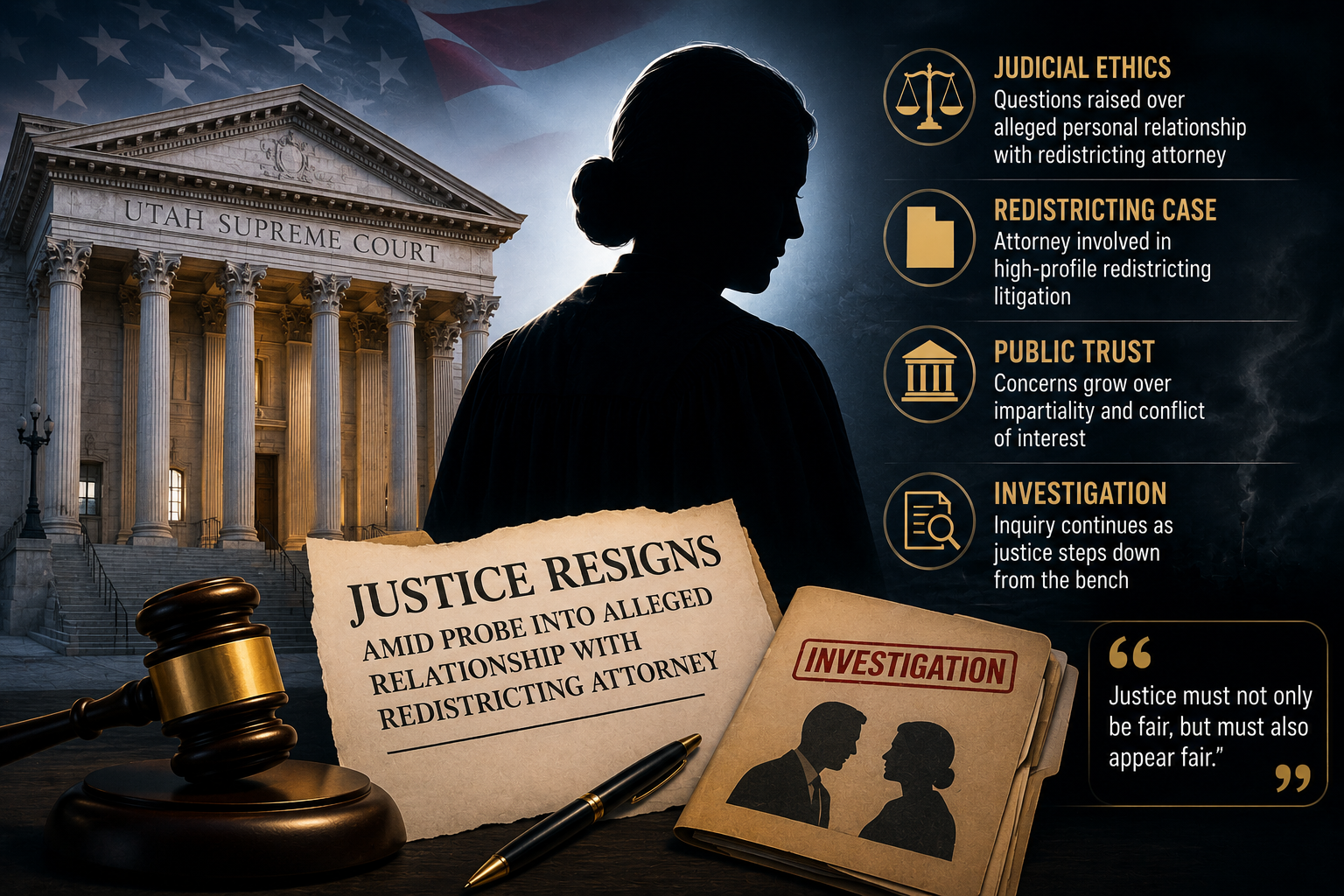
A major controversy has emerged in the American judicial system after a justice from the Utah Supreme Court resigned amid an investigation into an alleged relationship with an attorney connected to redistricting litigation.
The development has quickly become a nationally discussed legal and political issue, raising questions about:
- judicial ethics
- transparency in public office
- conflict of interest concerns
- public trust in courts
Why the Resignation Is Making National Headlines
The resignation has attracted widespread attention because it involves:
- a sitting state supreme court justice
- allegations tied to professional conduct
- a politically sensitive redistricting issue
The controversy intensified after reports suggested an alleged personal relationship between the justice and an attorney involved in major legal matters related to electoral district boundaries.
While investigations are still central to the public discussion, the resignation itself has fueled broader debates over accountability within the judicial system.
What Is Redistricting and Why Does It Matter?
Redistricting refers to the process of redrawing electoral district boundaries after census data updates.
In the United States, redistricting is highly significant because it can affect:
- election outcomes
- political representation
- voting influence
- party advantages in legislatures
This is why court cases involving redistricting often become politically sensitive and legally complex.
Concerns Over Judicial Ethics and Public Trust
One of the biggest concerns surrounding the controversy is judicial impartiality.
Critics argue that:
- judges must remain independent
- even perceived conflicts of interest can damage trust
- transparency is essential for public confidence
The case has renewed national conversations around:
- judicial accountability
- ethics oversight
- disclosure standards for public officials
Why Judicial Independence Is Important
The judiciary is expected to function independently from:
- political pressure
- personal relationships
- external influence
Legal experts often stress that:
Public trust in courts depends heavily on fairness and neutrality
When questions arise about possible bias or ethical concerns, even without criminal allegations, institutional credibility can be affected.
Public and Political Reactions
The resignation has triggered mixed reactions across political and legal circles.
Some argue:
- stepping down was necessary to protect institutional integrity
- investigations should proceed transparently
Others believe:
- public judgment should wait until facts are fully established
- allegations alone should not define a person’s legacy
The case has become a major topic in discussions surrounding judicial reform and ethics laws.
Impact on Utah Politics and Legal System
The controversy could have long-term effects on:
- the reputation of the Utah Supreme Court
- ongoing redistricting debates
- future ethics policies
Observers believe the incident may also increase pressure for:
- stronger ethics guidelines
- expanded disclosure requirements
- more oversight mechanisms for judges
Could This Lead to Broader Judicial Reforms?
Some legal analysts believe this controversy could reignite discussions around reforms such as:
1. Stronger Conflict-of-Interest Rules
More detailed disclosure policies for judges.
2. Ethics Transparency
Public access to judicial ethics reviews and investigations.
3. Recusal Standards
Clearer guidelines on when judges should step aside from cases.
The Larger National Debate
The incident reflects a broader national conversation about:
- institutional accountability
- transparency in public office
- trust in democratic systems
As political and legal polarization grows, scrutiny of public institutions continues to increase across the United States.
Conclusion
The resignation of a justice from the Utah Supreme Court amid an ethics-related investigation has become one of the most discussed legal controversies in recent weeks.
While investigations and public discussions continue, the case highlights an important reality:
Public confidence in democratic institutions depends heavily on transparency, accountability, and ethical conduct
The long-term impact of this controversy may extend beyond one resignation, influencing future debates about judicial ethics across the United States.
FAQs
Why did the Utah Supreme Court justice resign?
The resignation came amid an investigation into an alleged relationship with a redistricting attorney.
What is redistricting?
Redistricting is the process of redrawing electoral district boundaries.
Why is judicial ethics important?
Judicial ethics help maintain fairness, neutrality, and public trust in courts.
Is the investigation still ongoing?
Public discussions and scrutiny surrounding the case continue.