The nuclear negotiations involving Iran are among the most complex and high-stakes geopolitical issues in the world.
At the center of this discussion is the Joint Comprehensive Plan of Action (JCPOA)—an agreement that continues to shape global politics, energy markets, and security dynamics.
But one key question keeps coming up:
Why is the nuclear deal so important for Iran—and why does Iran take such a firm, often uncompromising stance?
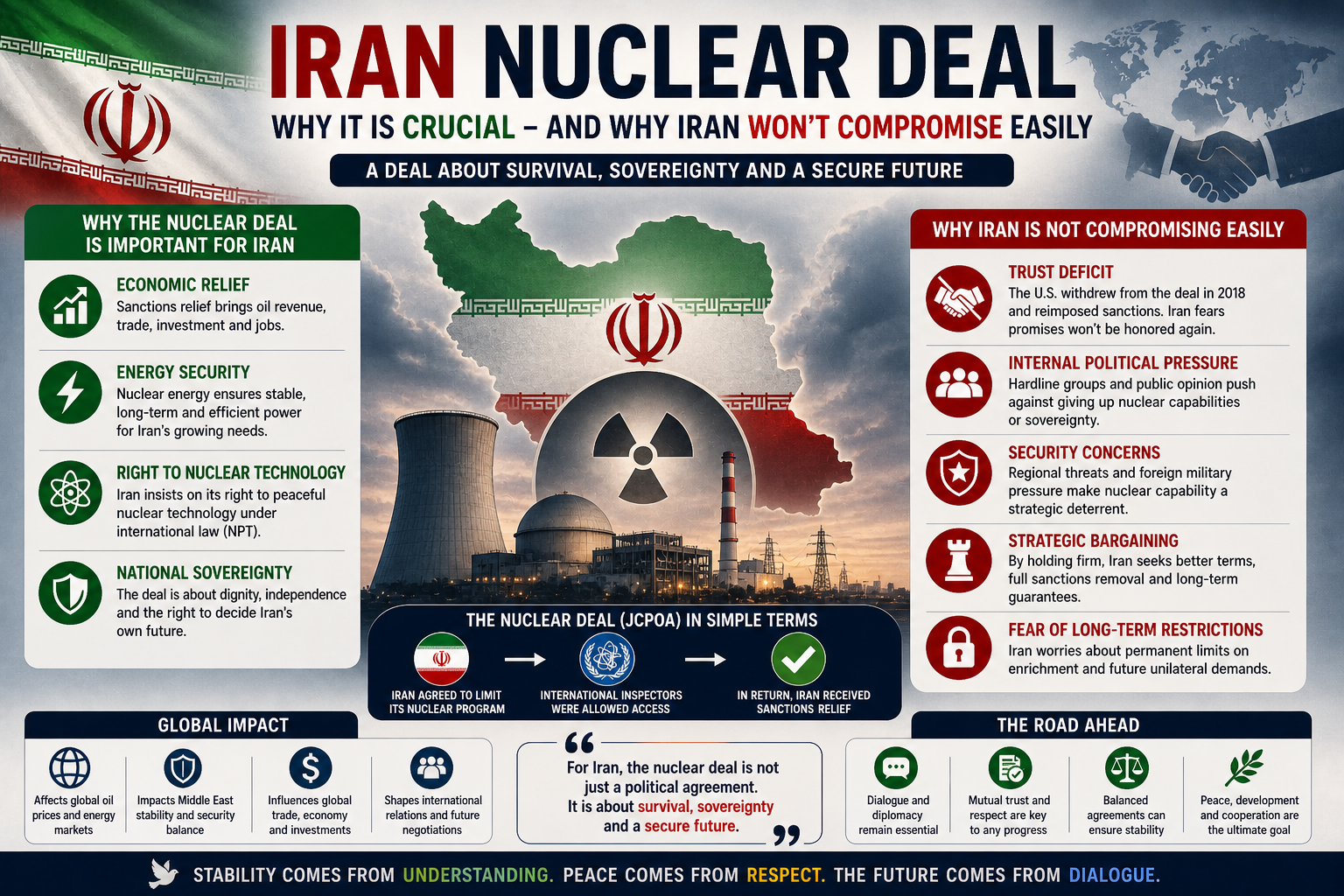
What Is the Iran Nuclear Deal (JCPOA)?
The Joint Comprehensive Plan of Action was signed in 2015 between Iran and major world powers.
Under the deal:
- Iran agreed to limit its nuclear program
- International inspectors were allowed access
- In return, Iran received relief from economic sanctions
The goal was simple:
👉 Prevent nuclear weapons development while allowing peaceful nuclear use.
Why the Nuclear Deal Is Critical for Iran
1. Economic Survival and Sanctions Relief
Sanctions have severely impacted Iran’s economy.
Before the deal:
- Iran lost billions in oil revenue
- inflation and currency collapse increased
- trade restrictions isolated the economy
After the deal:
- exports increased
- economy stabilized
- international trade resumed
👉 For Iran, the nuclear deal is not just political—it is economic survival.
2. Right to Nuclear Technology
Iran insists that:
- nuclear energy is its sovereign right
- it should be allowed for peaceful purposes
Under international agreements, countries can use nuclear technology for:
- electricity
- medical research
- scientific development
👉 Giving up enrichment entirely is seen by Iran as giving up its technological independence.
3. National Sovereignty and Pride
For Iran, the nuclear issue is deeply tied to:
- national identity
- independence
- resistance to external pressure
Accepting strict conditions without balance could be viewed internally as:
loss of sovereignty
4. Security and Deterrence Concerns
Recent geopolitical tensions have made Iran more cautious.
- Ongoing conflicts and military pressure have increased tensions
- Iran sees nuclear capability as a deterrent against threats
- Some analysts argue that external pressure pushes Iran toward a stronger stance
👉 In simple terms:
If a country feels threatened, it is less likely to compromise on strategic capabilities.
Why Iran Is Not Willing to Compromise Easily
1. Trust Deficit with Global Powers
One major reason is trust.
- The US withdrew from the nuclear deal in 2018
- sanctions were reimposed
- Iran resumed nuclear activities afterward
👉 From Iran’s perspective:
Why agree again if the deal may not be honored?
2. Internal Political Pressure
Iran’s leadership must balance:
- public opinion
- national pride
- political factions
Recent reports show that hardline elements have gained influence, making compromise even more difficult
3. Strategic Bargaining Power
Negotiations are not just about agreement—they are about leverage.
By holding firm, Iran aims to:
- secure better terms
- push for full sanctions removal
- maintain negotiating strength
4. Fear of Long-Term Restrictions
Some parts of the deal include:
- limits on uranium enrichment
- restrictions on nuclear facilities
- monitoring by international agencies
Iran worries that:
- these limits may weaken its long-term capabilities
- future agreements may become stricter
Is Iran Completely Refusing to Compromise?
Not exactly.
Recent developments show that:
- Iran has shown willingness for talks
- proposals have been made for negotiations
- but key disagreements remain
👉 So the reality is:
Iran is negotiating—but on its own terms
Global Impact of Iran’s Nuclear Stance
Iran’s decisions affect:
- global oil prices
- Middle East stability
- international security
- energy markets
Any escalation or agreement can have worldwide consequences.
The Bigger Picture: Power, Politics, and Survival
The nuclear issue is not just about weapons.
It is about:
- economic survival
- national identity
- global power balance
- geopolitical influence
Conclusion
Iran’s firm stance on the nuclear deal is not random.
It is driven by:
- economic necessity
- sovereignty concerns
- security pressures
- geopolitical strategy
So the real takeaway is:
Iran is not simply refusing to compromise—it is negotiating from a position of survival and strength
FAQs
What is the Iran nuclear deal (JCPOA)?
It is a 2015 agreement limiting Iran’s nuclear program in exchange for sanctions relief.
Why is the nuclear deal important for Iran?
It impacts Iran’s economy, sovereignty, and global position.
Why doesn’t Iran compromise easily?
Due to trust issues, security concerns, and the need to protect national interests.
Is Iran developing nuclear weapons?
Iran states its program is for peaceful purposes, though concerns remain globally.