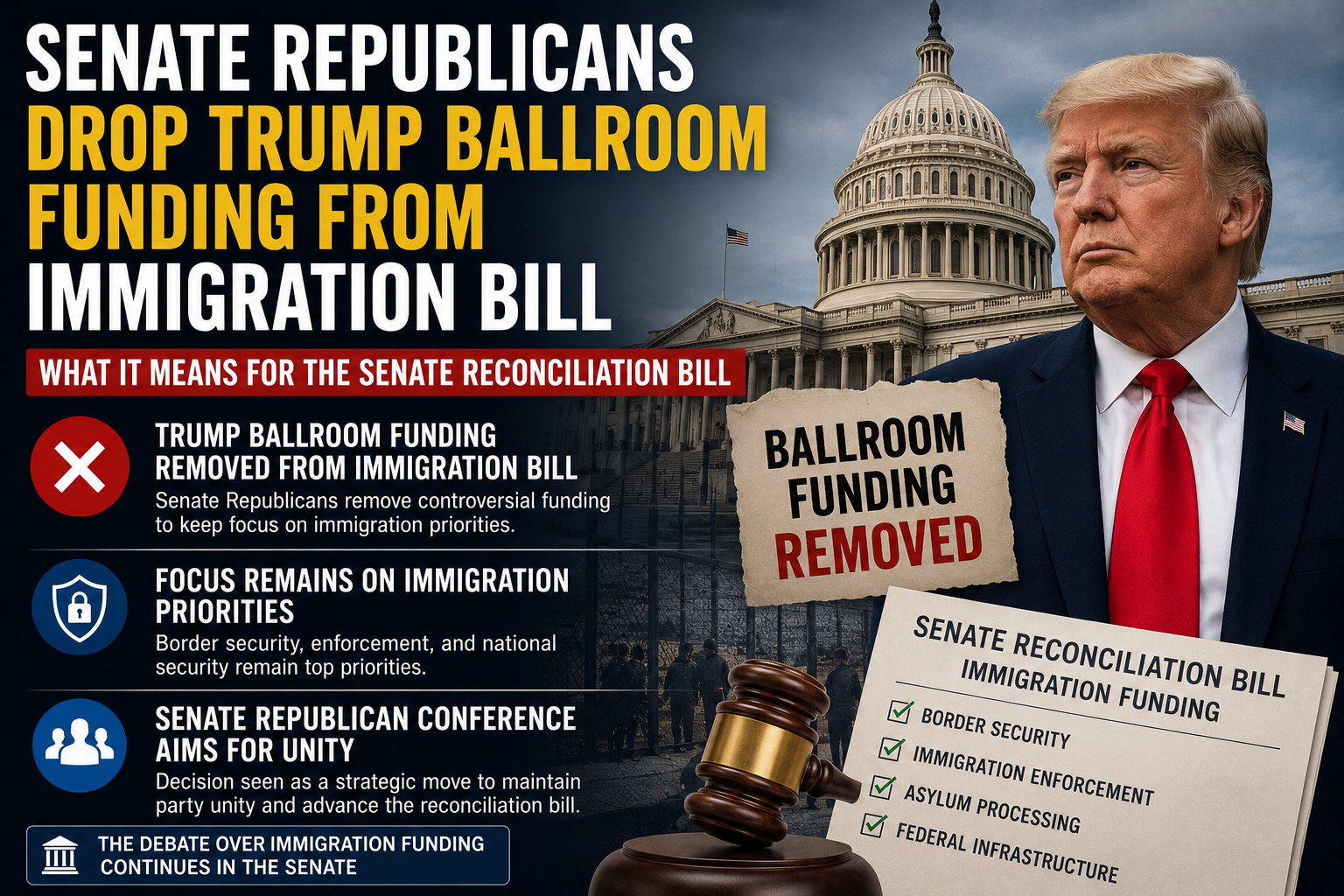
The latest developments on Capitol Hill have added a new twist to the ongoing debate surrounding immigration funding and federal spending priorities. In a move that surprised many political observers, Senate Republicans reportedly removed funding linked to a proposed Trump ballroom project from the broader immigration legislation currently being debated in Washington.
The decision has sparked renewed discussion about the future of the Senate reconciliation bill, government spending priorities, and the internal dynamics of the Senate Republican Conference.
Why the Funding Was Removed
According to lawmakers familiar with negotiations, Senate Republicans concluded that including funding associated with a ballroom project risked distracting attention from the core purpose of the immigration package.
Supporters of the move argued that the legislation should remain focused on issues such as:
- Border security
- Immigration enforcement
- Processing of asylum claims
- Federal immigration infrastructure
- National security concerns
By removing the ballroom funding provision, Senate negotiators hope to strengthen support for the broader legislation and avoid unnecessary controversy.
The Immigration Bill Remains a Major Political Battleground
The immigration debate continues to be one of the most significant issues facing Congress.
Republicans have consistently argued that stronger border controls and enhanced enforcement measures are necessary to address record migration pressures.
Democrats, meanwhile, have emphasized the need for balanced reforms that address humanitarian concerns while improving the efficiency of the immigration system.
The latest Senate reconciliation bill discussions have become a focal point in this broader national debate.
What Is the Senate Reconciliation Bill?
Budget reconciliation is a special legislative process that allows certain fiscal measures to pass the Senate with a simple majority rather than the traditional 60-vote threshold.
Because of this procedural advantage, reconciliation bills often become vehicles for major policy initiatives involving:
- Federal spending
- Tax policies
- Immigration-related funding
- Healthcare programs
- Infrastructure investments
As a result, every provision included in such legislation receives intense scrutiny from lawmakers, lobbyists, and policy analysts.
The Role of the Senate Republican Conference
The Senate Republican Conference faces a difficult balancing act.
Party leaders must satisfy competing priorities among:
- Fiscal conservatives
- National security advocates
- Border security hawks
- Moderate Republicans
Removing controversial provisions can often help maintain party unity and increase the chances of legislative success.
Political analysts believe the decision to drop the ballroom funding reflects a strategic effort to keep the focus on immigration policy rather than unrelated spending items.
Why Immigration Funding Is Under the Spotlight
Immigration remains one of the most searched and debated political topics in the United States.
Key issues include:
Border Security
Many lawmakers continue calling for increased funding for border infrastructure, personnel, and surveillance technology.
Processing Backlogs
Federal agencies face significant backlogs in immigration and asylum cases, creating pressure on the system.
State and Local Costs
Several states argue that rising migration levels have increased demands on public services and local budgets.
National Security Concerns
Supporters of stricter policies frequently cite national security and law enforcement considerations.
These issues ensure that immigration funding remains a central political issue heading into future elections.
Political Reactions to the Decision
The removal of the funding provision generated mixed reactions.
Some lawmakers praised the move as a practical step that keeps the legislation focused on immigration priorities.
Others argued that the controversy highlights broader concerns about how spending measures are added to large legislative packages.
Regardless of political affiliation, many observers agree that the episode demonstrates the complexity of modern congressional negotiations.
What Happens Next?
The immigration bill is expected to continue moving through the Senate process, where lawmakers will debate amendments, funding allocations, and policy provisions.
Key questions remain:
- Will the Senate Republican Conference remain united?
- Can lawmakers reach bipartisan agreements?
- What immigration measures will survive final negotiations?
- How will voters react to the final package?
The answers could shape U.S. immigration policy for years to come.
Why This Story Matters
While the ballroom funding provision may represent only a small part of the broader debate, its removal highlights a larger issue in American politics:
Should major legislation focus exclusively on its stated purpose, or should it also serve as a vehicle for unrelated spending priorities?
As Congress continues debating immigration reform and federal spending, voters are paying close attention to how lawmakers answer that question.
Final Thoughts
The decision by Senate Republicans to drop Trump ballroom funding from the immigration bill underscores the political sensitivity surrounding federal spending and immigration policy.
With the Senate reconciliation bill remaining one of the most closely watched legislative battles in Washington, every amendment and funding provision could influence the final outcome.
As negotiations continue, the debate will likely remain at the center of national political discussions, reflecting the broader challenges facing lawmakers as they attempt to balance fiscal responsibility, border security, and legislative compromise.