In the age of social media politics, satire pages, meme-based political commentary, and parody accounts are rapidly becoming one of the biggest forces shaping online public opinion in India.
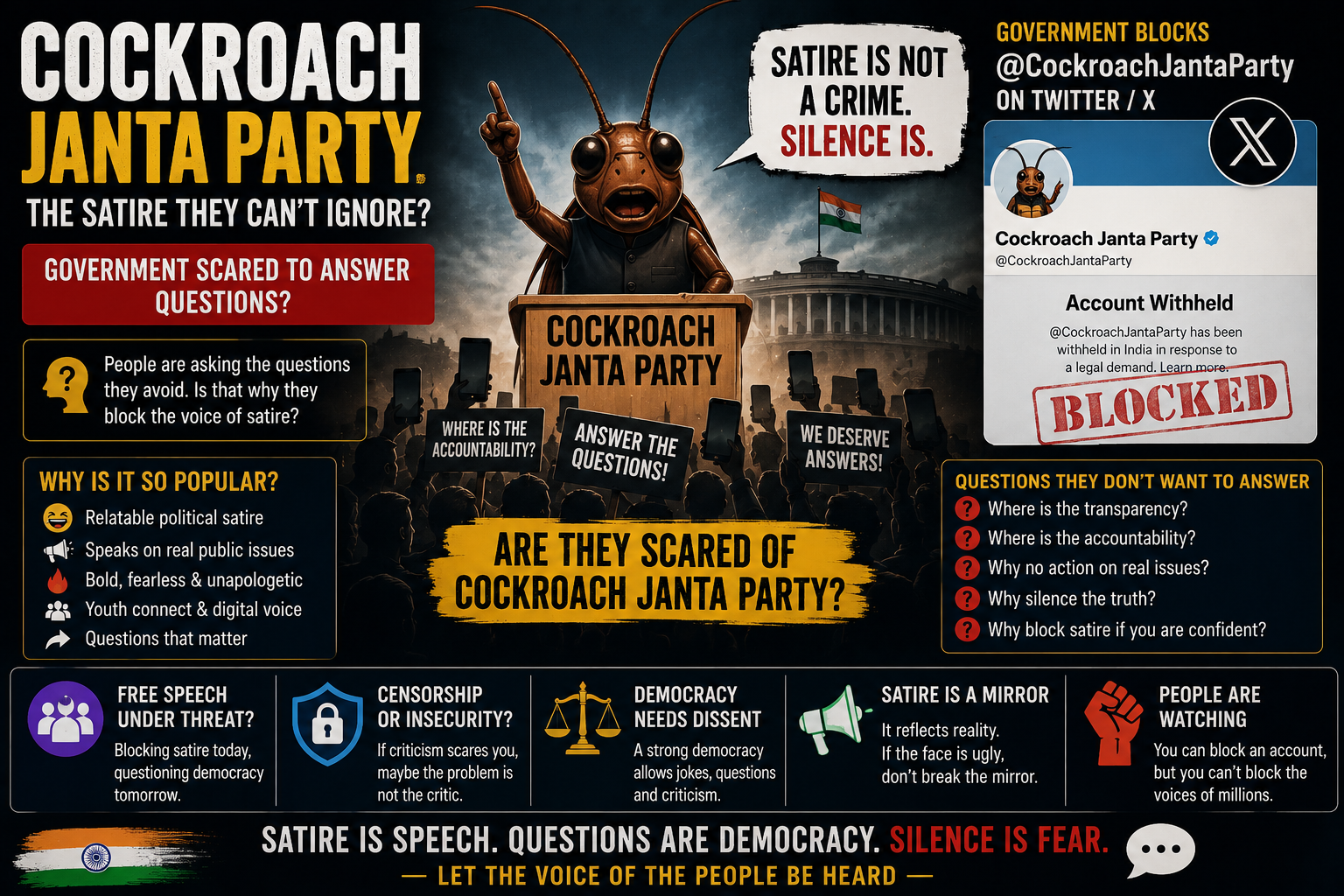
One such name increasingly discussed across platforms is the so-called “Cockroach Janta Party,” a viral online satire trend that has attracted attention for its sharp political humor, criticism of governance, and commentary on public issues.
At the center of the discussion are broader questions involving:
- freedom of expression
- political criticism
- online censorship
- satire culture
- digital democracy
The Rise of Political Satire in India
Over the last decade, political communication in India has changed dramatically.
Earlier, television debates and newspapers dominated public discourse. Today, however, meme pages, satire handles, and viral commentary accounts often shape online conversations faster than traditional media.
Political satire has become popular because it allows people to discuss serious issues through:
- humor
- memes
- sarcasm
- short videos
- parody commentary
Many young users now engage with politics primarily through digital satire content.
Why Satire Pages Go Viral
Satire pages become popular because they simplify complex political topics into relatable online content.
They often discuss issues involving:
- inflation
- unemployment
- governance
- media narratives
- public frustration
- political controversies
This style of communication spreads quickly on platforms like:
- X (formerly Twitter)
- YouTube
because audiences find it more engaging than traditional political speeches.
The Debate Around Blocking Social Media Handles
One of the biggest controversies involving online political pages occurs when accounts are reportedly restricted, suspended, or blocked.
Critics often argue that:
- political satire should remain protected speech
- governments should answer criticism openly
- online dissent is part of democracy
Supporters of stronger moderation policies argue that governments and platforms may act when content allegedly violates platform rules, misinformation standards, or legal frameworks.
The debate remains highly polarized across social media.
Why People Connect Satire With Fear of Questions
Whenever political criticism trends online, many users begin asking whether authorities are uncomfortable responding to difficult public questions.
This perception grows especially when:
- criticism goes viral
- satire gains mass attention
- online campaigns attract youth audiences
Some people interpret restrictions or moderation actions as signs that political establishments are uncomfortable with digital criticism, while others argue moderation decisions are often more complicated and platform-driven.
Social Media Has Changed Political Power
Digital platforms have transformed how political influence works globally.
Today:
- one viral meme can reach millions
- satire accounts can shape narratives
- ordinary citizens can challenge mainstream discussions
This has reduced the monopoly traditional political communication once had.
Political parties, governments, activists, influencers, and satire creators now compete simultaneously in the online attention economy.
The Clash Between Governments and Digital Criticism
Across the world — not just in India — governments increasingly face challenges from online commentary culture.
Major concerns include:
- misinformation
- fake news
- hate speech
- political propaganda
- censorship accusations
This creates constant tension between:
Free Speech
and
Content Regulation
The balance between the two remains one of the biggest debates in modern democracies.
Why Young Audiences Prefer Satirical Political Content
Younger internet audiences often prefer political satire because it feels:
- fast
- relatable
- emotionally expressive
- anti-establishment
- easier to consume
Long television debates are increasingly being replaced by:
- reels
- memes
- short-form commentary
- parody edits
This shift is reshaping political culture itself.
The Role of Internet Culture in Modern Democracy
The internet has created a new kind of political participation where:
- memes influence public opinion
- hashtags drive discussions
- parody accounts create narratives
- satire becomes political activism
Many experts believe digital culture now influences elections, public trust, and political image-building more than traditional campaigning alone.
Can Satire Strengthen Democracy?
Supporters of political satire argue that humor helps:
- challenge authority
- encourage debate
- increase political awareness
- make governments more accountable
Historically, satire has often played a major role in democratic societies by allowing citizens to criticize power structures creatively.
Critics Warn About Online Polarization
At the same time, critics argue that extreme online political content can sometimes increase:
- misinformation
- emotional polarization
- digital harassment
- echo chambers
Because of this, the debate over online political content moderation continues intensifying globally.
The Bigger Question About Modern Politics
The discussion surrounding satire pages reflects a larger global reality:
Politics is no longer controlled only through rallies and television.
Today, political influence also depends on:
- viral trends
- online narratives
- social media engagement
- meme culture
- digital perception battles
Governments worldwide are still adapting to this rapidly changing digital political environment.
Conclusion
The growing attention around satire trends like the “Cockroach Janta Party” reflects how deeply internet culture has become connected to politics in India.
Whether people view such satire as:
- democratic criticism
- online activism
- political entertainment
- digital disruption
one thing is clear:
Social media has permanently changed how political conversations happen
As debates over free speech, online moderation, and political criticism continue, digital satire will likely remain a powerful force in shaping public opinion for years to come.
FAQs
Why are political satire pages becoming popular?
Because they present political issues through humor, memes, and relatable online content.
Why do debates happen around blocked social media accounts?
Because people often connect moderation actions with questions about free speech and political criticism.
How has social media changed politics?
Social media allows ordinary users, influencers, and satire pages to shape political conversations rapidly.
What is political satire?
Political satire uses humor, parody, and irony to comment on political events and public issues.