A major policy proposal is making headlines across the United States.
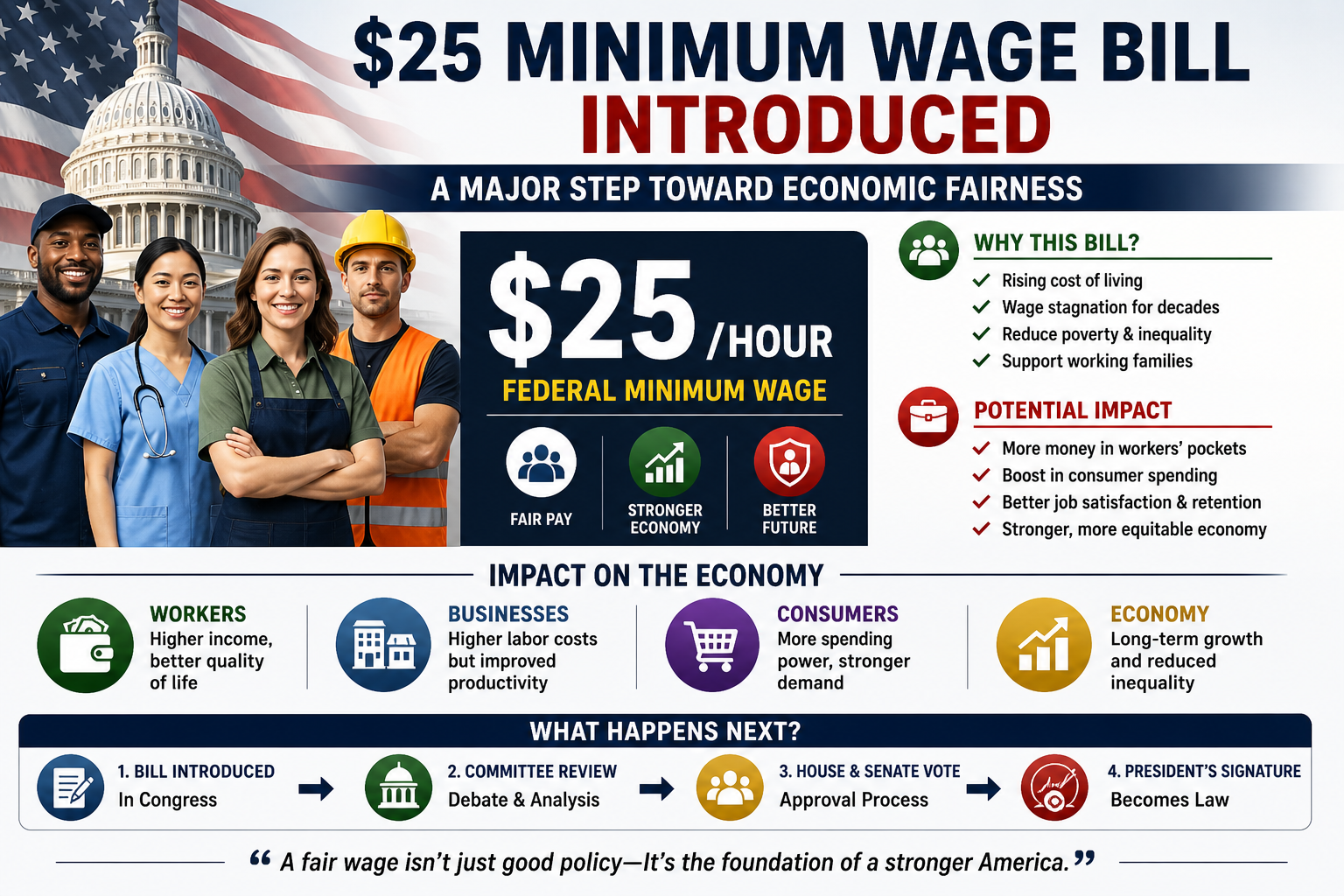
Lawmakers have introduced a bill to raise the federal minimum wage to $25 per hour, a move that could significantly reshape the country’s economic landscape.
But what does this proposal really mean—for workers, businesses, and the broader economy?
What Is the $25 Minimum Wage Bill?
The proposed legislation aims to increase the federal minimum wage from its current level to $25 per hour.
If passed, this would represent:
- one of the largest wage increases in U.S. history
- a major shift in labor policy
- a direct impact on millions of workers
Why Is This Proposal Being Introduced?
Supporters argue that the increase is necessary due to:
1. Rising Cost of Living
- Housing, food, and healthcare costs have increased significantly
- Many workers struggle to meet basic needs
2. Wage Stagnation
- Real wages have not kept pace with inflation
- Income inequality continues to grow
3. Economic Equity
- Higher wages can reduce poverty
- Improve quality of life for low-income workers
How Would a $25 Minimum Wage Impact Workers?
For workers, the impact could be substantial.
Benefits
- Higher income and purchasing power
- Improved living standards
- Reduced financial stress
Millions of workers could see their wages increase significantly, especially in low-paying sectors.
Impact on Businesses: Opportunities and Challenges
Businesses may face mixed outcomes.
Potential Challenges
- Increased labor costs
- Pressure on small businesses
- Possible price increases
Potential Benefits
- Higher employee retention
- Increased productivity
- More consumer spending
Will Prices Go Up? Understanding Inflation Concerns
One of the biggest concerns is inflation.
Critics argue that:
- higher wages may lead to higher prices
- businesses may pass costs to consumers
However, economists note:
- the impact depends on implementation
- gradual increases may reduce inflation risks
Job Market Impact: Will Jobs Be Lost?
This is a widely debated topic.
Concerns
- businesses may reduce hiring
- automation could increase
Counterarguments
- higher wages can boost demand
- stronger economy can create jobs
👉 The actual impact depends on economic conditions and policy design.
How Does $25 Compare Globally?
If implemented, the U.S. would have one of the highest minimum wages globally.
This could:
- improve global competitiveness for workers
- set new benchmarks for labor standards
Political and Public Reaction
The proposal has sparked intense debate.
Supporters Say:
- it is long overdue
- workers deserve fair pay
- it reduces inequality
Critics Say:
- it may hurt small businesses
- could increase inflation
- may lead to job losses
What Happens Next?
For the bill to become law:
- It must pass both houses of Congress
- Be approved by the President
The outcome remains uncertain, but discussions are expected to continue.
Why This Topic Is Trending Worldwide
This issue is trending because it affects:
- millions of workers
- businesses across industries
- the global economy
Searches for:
- “$25 minimum wage USA”
- “minimum wage increase impact”
- “new wage law US”
are rapidly increasing.
Conclusion
The proposal to raise the federal minimum wage to $25 per hour could be a transformative moment for the U.S. economy.
It represents a balance between:
- improving worker livelihoods
- managing business sustainability
- maintaining economic stability
Whether it becomes law or not, it has already sparked one of the most important economic debates of the decade
FAQs
What is the proposed minimum wage in the new bill?
The bill proposes increasing the federal minimum wage to $25 per hour.
Will the $25 minimum wage increase inflation?
It may have some impact, but it depends on implementation and economic conditions.
Who benefits the most from this bill?
Low-income workers and those in minimum wage jobs.
Is the bill already passed?
No, it is still under consideration.