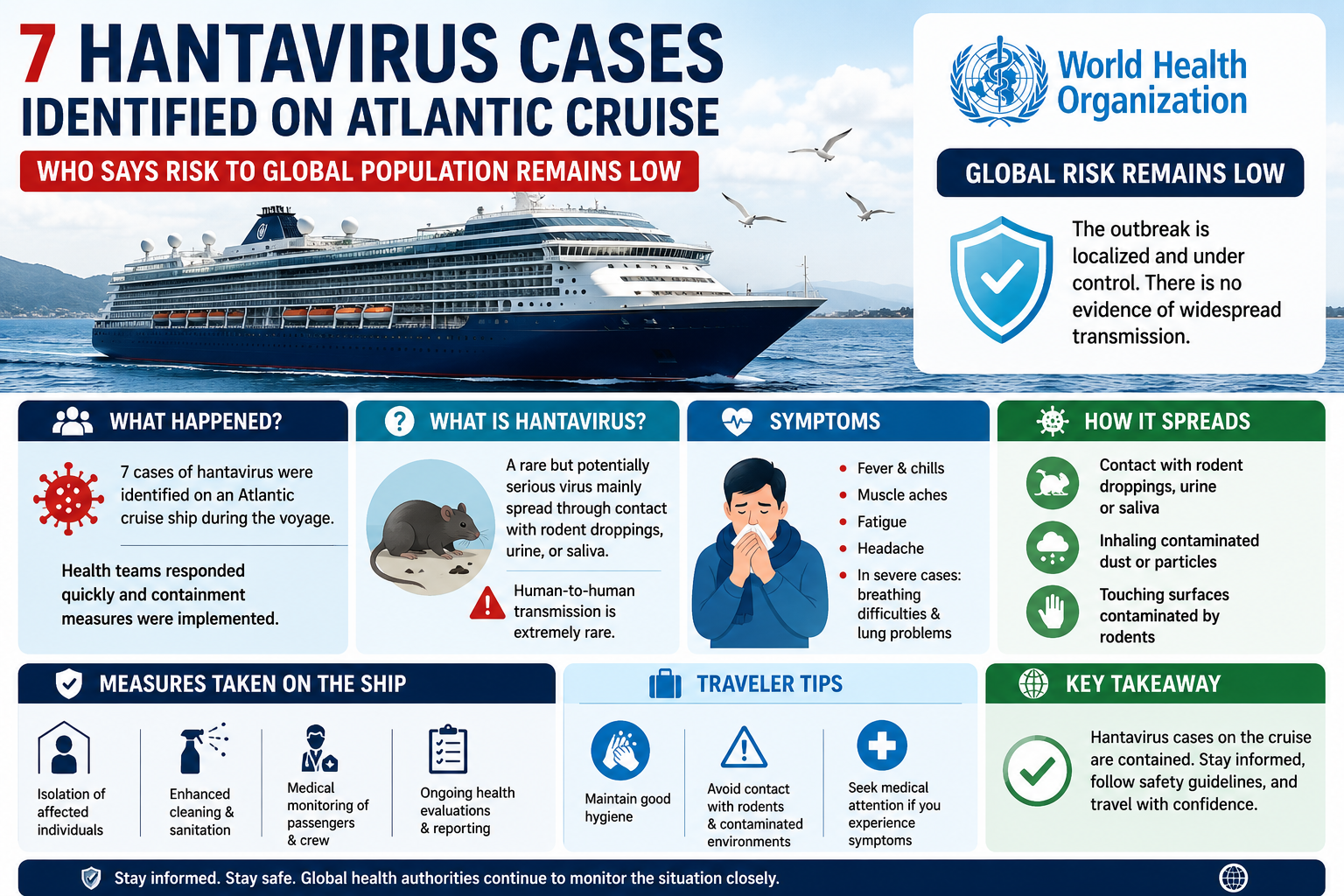
A recent health alert has drawn attention after seven cases of hantavirus were identified aboard an Atlantic cruise ship.
While such incidents naturally raise concerns, global health authorities—including the World Health Organization—have clarified that the overall risk to the global population remains low.
But what exactly is hantavirus, and should travelers be worried?
What Happened on the Atlantic Cruise?
Health officials confirmed that:
- 7 individuals onboard tested positive for hantavirus
- The cases were detected during the voyage
- Medical teams quickly implemented containment measures
Cruise ships are known for close environments, which makes rapid response crucial in such situations.
What Is Hantavirus?
Hantavirus is a rare but potentially serious viral infection.
It is primarily spread through:
- contact with rodent droppings, urine, or saliva
- inhalation of contaminated particles
Unlike common viruses, human-to-human transmission is extremely rare.
Symptoms of Hantavirus Infection
Early symptoms can resemble flu-like illness:
- fever and chills
- muscle aches
- fatigue
- headaches
In severe cases, it can lead to:
- breathing difficulties
- lung complications
👉 Early medical attention is essential.
WHO’s Statement: Should You Be Concerned?
The World Health Organization has assessed the situation and stated:
- the outbreak is localized
- there is no evidence of widespread transmission
- global risk remains low
This reassurance is based on:
- the nature of hantavirus transmission
- effective containment measures onboard
Why Cruise Ship Cases Get Attention
Cruise ships often attract global attention during health incidents because:
- passengers come from multiple countries
- confined spaces can increase exposure risks
- outbreaks can spread quickly if not controlled
However, in this case:
rapid response has limited the situation effectively
How Is Hantavirus Different from Other Viral Outbreaks?
Unlike viruses such as COVID-19:
- hantavirus is not easily transmitted between people
- it typically originates from environmental exposure
- outbreaks are usually isolated
This significantly reduces the risk of global spread.
Safety Measures Taken on the Ship
Authorities implemented several precautions:
- isolation of affected individuals
- enhanced sanitation protocols
- monitoring of passengers and crew
- medical evaluations
These steps are standard in managing infectious disease risks.
What Travelers Should Know
If you are planning a cruise or travel:
Basic Safety Tips
- maintain hygiene
- avoid contact with contaminated environments
- report symptoms early
👉 Awareness is key, but panic is unnecessary.
Global Health Perspective
From a broader standpoint:
- hantavirus cases remain rare globally
- outbreaks are usually contained quickly
- international health systems are better prepared today
The response to this incident shows improved readiness and coordination.
Conclusion
The detection of hantavirus cases on an Atlantic cruise ship has understandably raised concerns.
However, according to the World Health Organization:
The risk to the global population remains low
With proper precautions and awareness, such incidents can be effectively managed without widespread impact.
FAQs
What is hantavirus?
A rare viral infection usually spread through contact with rodent waste.
Can hantavirus spread between humans?
Human-to-human transmission is extremely rare.
Is the cruise ship outbreak dangerous globally?
No, WHO states the global risk is low.
What are early symptoms of hantavirus?
Fever, muscle aches, fatigue, and headaches.