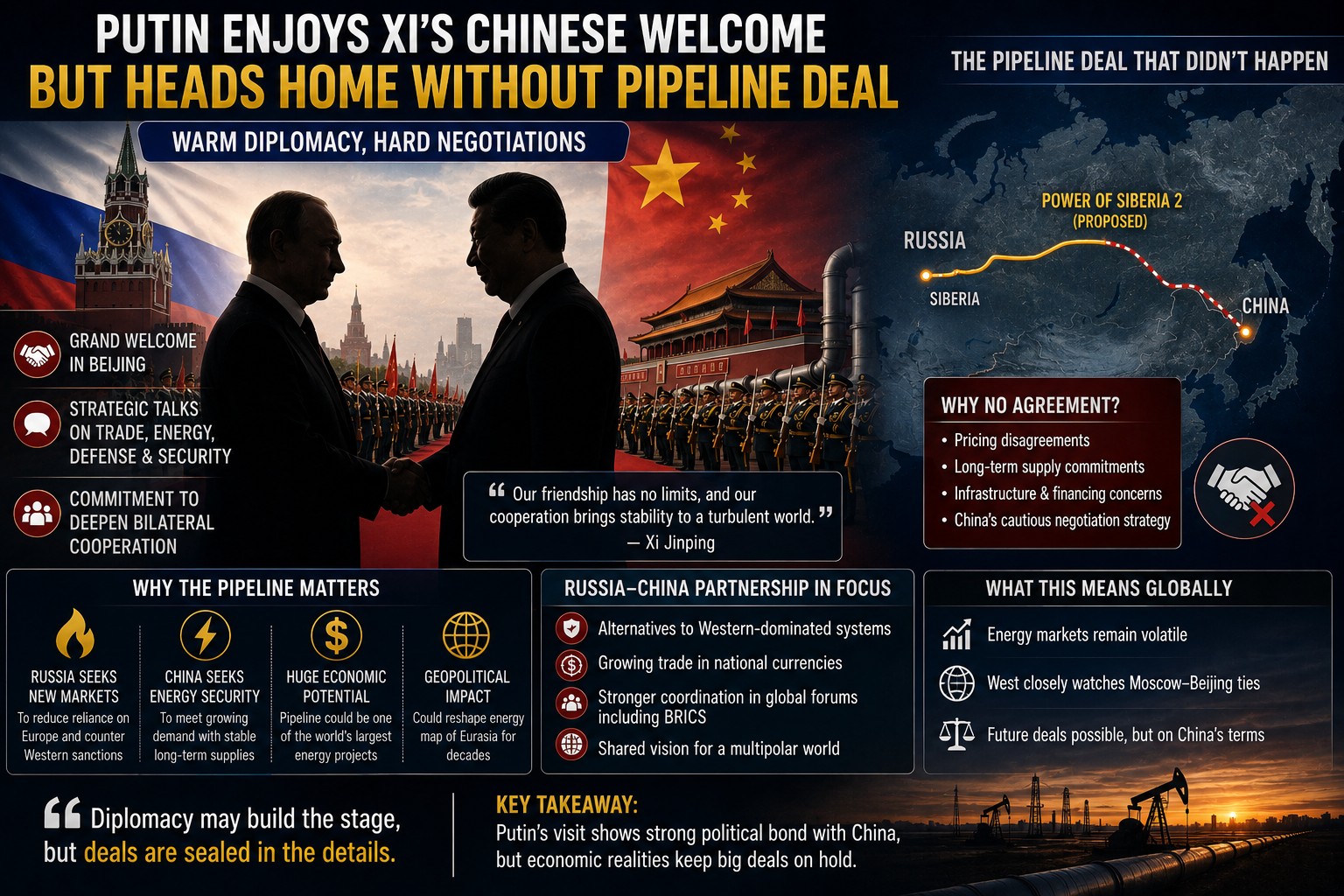
Russian President Vladimir Putin received a high-profile diplomatic welcome from Xi Jinping during his latest visit to China, but despite the symbolic display of partnership, one major issue remained unresolved — a long-discussed energy pipeline agreement.
The visit highlighted both:
- strong diplomatic coordination
- strategic economic caution
between two of the world’s most influential powers.
A Carefully Choreographed Diplomatic Meeting
The meeting between Vladimir Putin and Xi Jinping was filled with symbolism.
State ceremonies, military honors, and public statements emphasized what both countries describe as a “strategic partnership” aimed at expanding cooperation in:
- trade
- energy
- defense
- technology
- global diplomacy
The warm reception signaled that relations between Russia and China remain politically strong despite growing tensions with Western countries.
The Missing Pipeline Deal
Despite the positive optics, one of the biggest expected outcomes — a major pipeline agreement — reportedly did not materialize.
The proposed project, often connected to discussions surrounding:
- Power of Siberia 2
would significantly increase Russian gas exports to China through a massive energy corridor.
However, reports suggest the two sides were unable to finalize terms involving:
- pricing
- long-term supply commitments
- infrastructure financing
- energy demand expectations
This absence became one of the most discussed aspects of the visit
Why the Pipeline Deal Matters So Much
For Russia, expanding energy exports toward Asia has become increasingly important as Western sanctions and geopolitical tensions reshape global trade flows.
China, meanwhile, continues seeking:
- energy security
- diversified fuel sources
- stable long-term imports
A successful pipeline agreement could reshape energy dynamics across Eurasia for decades.
China’s Strategic Approach to Russia
Although China and Russia cooperate closely on many international issues, analysts say Beijing remains highly pragmatic in economic negotiations.
China is believed to be carefully balancing:
- access to cheaper energy
- global diplomatic positioning
- economic leverage
- long-term strategic interests
This may explain why major agreements sometimes move slower than expected despite strong political messaging.
The Geopolitical Importance of Russia–China Relations
The growing partnership between Moscow and Beijing is one of the most important geopolitical developments of the modern era.
Their cooperation increasingly affects:
- global energy markets
- international trade routes
- military strategy
- BRICS influence
- global currency discussions
Many analysts believe the relationship could help shape a more multipolar world order.
Energy Politics Is Reshaping Global Alliances
Energy has become one of the biggest drivers of global diplomacy.
Countries now compete heavily for:
- oil access
- gas supply routes
- renewable technology dominance
- energy security partnerships
Because of this, pipeline projects are no longer just economic deals — they are major geopolitical tools.
Why China Holds Strong Negotiating Power
Experts say China currently has significant leverage in energy negotiations because:
- Russia urgently needs alternative export markets
- China has multiple energy sourcing options
- Beijing can negotiate from a position of economic strength
This dynamic may influence the pace and structure of future agreements.
The Role of BRICS and Global Power Shifts
The meeting also comes during a period of growing influence for the BRICS alliance.
Russia and China continue promoting cooperation involving:
- local currency trade
- reduced dollar dependence
- alternative financial systems
- expanded Global South partnerships
This broader geopolitical context makes every Russia-China summit globally significant.
Western Countries Closely Watching the Relationship
Governments in:
- United States
- United Kingdom
- European Union nations
continue monitoring Moscow-Beijing cooperation carefully.
Many Western analysts believe deeper Russia-China alignment could alter:
- international sanctions dynamics
- global trade systems
- security alliances
- technological competition
Why the Deal Delay Does Not Mean Failure
Even though no final pipeline deal was announced, experts caution against viewing the visit as unsuccessful.
Large energy agreements often require years of negotiation because they involve:
- infrastructure costs
- pricing structures
- geopolitical risk assessments
- long-term market forecasts
The discussions themselves remain strategically important.
How Global Markets Reacted
Financial and energy markets closely followed the summit because pipeline developments could influence:
- global gas prices
- Asian energy supply chains
- European energy competition
- long-term commodity markets
Investors increasingly view geopolitics and energy policy as deeply interconnected.
Could Russia and China Still Finalize the Deal Later?
Many analysts believe negotiations are likely to continue.
Both countries still have strong incentives for cooperation involving:
- long-term energy trade
- regional influence
- strategic economic partnerships
Future developments may depend on:
- global energy demand
- sanctions pressure
- economic conditions
- geopolitical shifts
Conclusion
The latest meeting between Vladimir Putin and Xi Jinping demonstrated that the relationship between Russia and China remains strategically important for both nations.
However, the absence of a finalized pipeline agreement also showed that even close geopolitical partners continue prioritizing national economic interests during major negotiations.
As global diplomacy becomes increasingly shaped by energy, trade, and shifting alliances, one thing is clear:
The Russia–China partnership will remain one of the most important geopolitical relationships in the world
FAQs
Why did Putin visit China?
To strengthen diplomatic, economic, and strategic cooperation with China.
What is the pipeline deal about?
It involves expanding Russian natural gas exports to China through major pipeline infrastructure.
What is Power of Siberia 2?
A proposed gas pipeline project connecting Russia and China.
Why is the Russia-China relationship important?
Because it impacts global energy markets, geopolitics, and international economic systems.