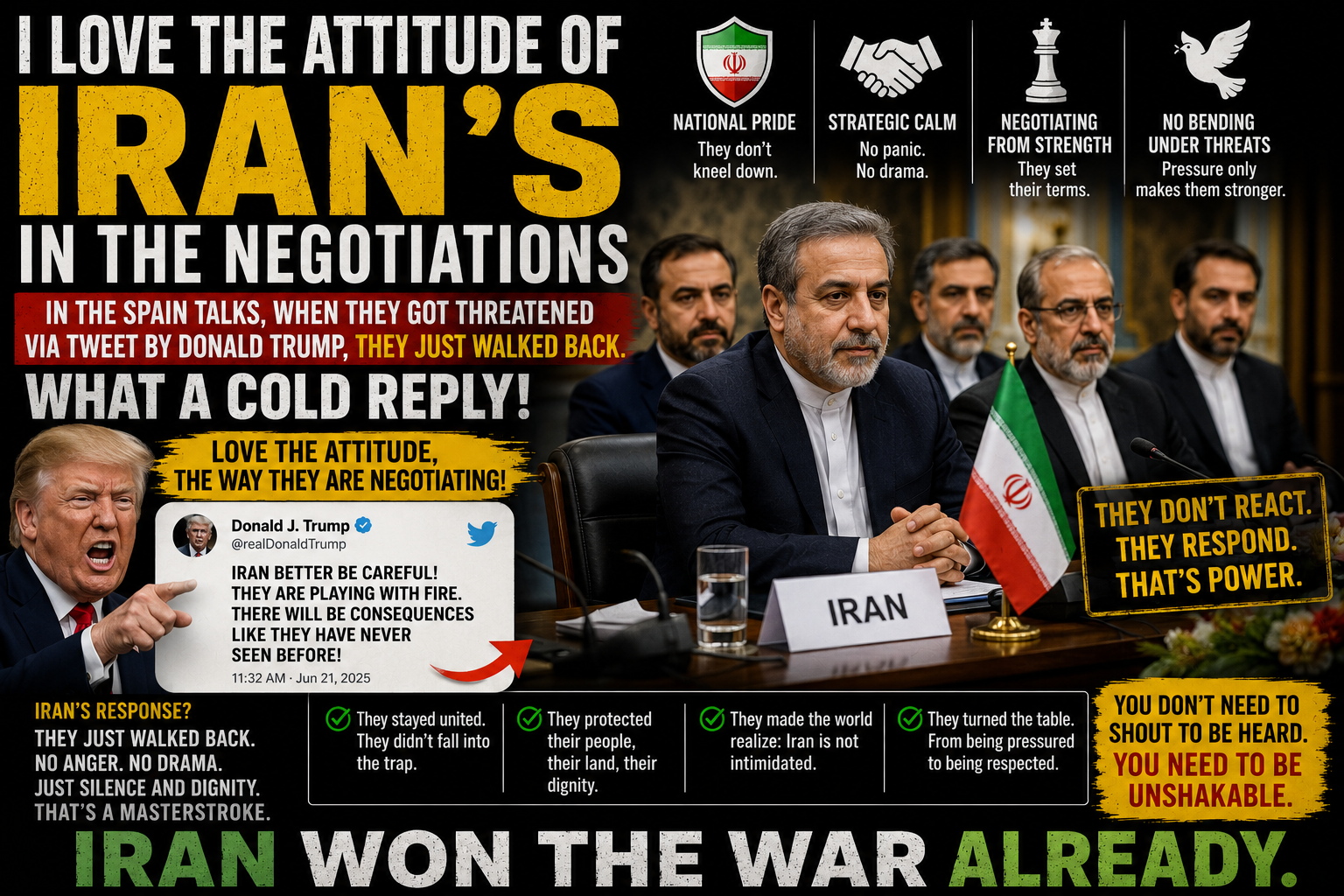
When Threats Meet Silence: Did Iran Deliver the Coldest Diplomatic Reply?
International diplomacy is often filled with dramatic statements, public warnings, and political posturing.
But sometimes, the strongest message in geopolitics is not delivered through a speech.
It is delivered by simply walking away.
Recent diplomatic developments involving Iran have once again demonstrated why Tehran remains one of the most unpredictable and resilient negotiating powers in global politics. Many observers were particularly struck by reports that Iranian negotiators maintained a calm posture despite public pressure and strong rhetoric coming from Washington.
For many geopolitical watchers, Iran’s approach can be summarized in one sentence:
“We negotiate on our terms, not under pressure.”
And whether one agrees with Iran or not, that negotiating attitude has attracted worldwide attention.
The Art of Negotiation: Why Iran’s Approach Is Being Discussed
Diplomatic negotiations are rarely about emotions.
They are about leverage.
Throughout decades of sanctions, military pressure, and diplomatic isolation, Iran has repeatedly demonstrated that it is willing to absorb significant pressure rather than immediately concede during negotiations.
Many analysts argue that this strategy has allowed Tehran to remain a central player in Middle Eastern geopolitics despite enormous external challenges.
Critics may disagree with Iranian policies, but even many of them acknowledge that Iranian negotiators are often disciplined and strategic.
Why Some Observers Admire Iran’s Diplomatic Style
Several aspects of Iran’s negotiating posture frequently attract attention:
1. Refusal to Negotiate Under Public Pressure
Iranian officials have consistently maintained that negotiations cannot succeed if conducted under threats or ultimatums.
Supporters of Tehran’s approach argue that this demonstrates national self-confidence and strategic patience.
2. Long-Term Strategic Thinking
Iran has often shown willingness to engage in prolonged negotiations lasting months or even years.
This patience frequently frustrates opponents seeking rapid outcomes.
3. Emphasis on Sovereignty
Iran regularly frames negotiations around national sovereignty and independence.
For many countries in the Global South, this messaging resonates strongly.
Did Iran Already Win?
Claims that “Iran has already won” depend largely on how one defines victory.
Military conflicts and geopolitical confrontations rarely produce simple winners and losers.
However, some analysts argue that Iran has achieved several important diplomatic objectives:
- Remaining a major regional power despite sanctions.
- Continuing to influence Middle Eastern geopolitics.
- Maintaining strategic partnerships with multiple countries.
- Ensuring that global powers continue engaging diplomatically with Tehran.
Others argue that sanctions and economic pressures continue imposing significant costs on Iran.
The reality is far more complex than declaring absolute victory or defeat.
Why Diplomacy Matters More Than Escalation
The world has witnessed enough wars.
Whether involving Iran, the United States, Russia, China, or any other major power, prolonged conflict almost always carries enormous humanitarian and economic costs.
Successful diplomacy requires:
- Patience.
- Strategic clarity.
- National confidence.
- Willingness to compromise without surrendering core interests.
Many observers believe Iran’s negotiators have demonstrated some of these qualities during high-pressure diplomatic engagements.
The Bigger Geopolitical Lesson
The larger lesson from modern diplomacy is straightforward:
Major powers cannot simply impose outcomes.
Even countries facing significant pressure often retain negotiating leverage if they remain politically united, strategically patient, and diplomatically active.
Iran’s experience illustrates this reality.
Regardless of political opinions about Tehran, its ability to remain an influential actor after decades of pressure is viewed by many analysts as a significant geopolitical achievement.
Final Thoughts
International negotiations are not sporting events.
They are complex interactions involving national interests, security concerns, economics, and diplomacy.
Yet one thing is clear:
Many geopolitical observers have been impressed by Iran’s calm, measured, and often uncompromising negotiating posture during periods of intense international pressure.
Whether history ultimately judges Iran’s strategy as successful will depend on future developments.
But for now, Tehran’s negotiating style continues to command attention across the global diplomatic landscape.